MemoryMD · 2016 — 2020
Build with rigor.
Built the quality system and led regulatory work behind two FDA 510(k) clearances.
Quality systems · Regulatory executionHealthcare & AII build AI products around how people think, decide, and work.
I’m a founder and hands-on engineer connecting interface design, commercial strategy, and research commercialization. I turn complex workflows into products people can understand, adopt, and use.The throughline · 2016–present
Each role shapes how I build today. Select a chapter.
Skills & capabilities
Select a skill to see the tools, judgment, and work behind it.
Design for divided attention, meaningful choices, and continuity between steps.
Applied in OrbVoice · Chef Mise · Lux Story
Speech, document extraction, and clinical drafts with review built into the workflow.
Applied in OrbVoice · Bill Analyzer · OrbBridge
Structure public datasets, compare benchmarks, and make findings traceable.
Applied in OrbDoc / NBC analysis · NCCI Check
Repeatable releases and checks across the mobile app, web platform, and backend.
Applied in OrbDoc · Klock
Study recent behavior, current workarounds, and the decisions behind switching.
Applied in OrbDoc · Research ventures
Navigate complex buying groups, shape proposals, and develop long-term accounts.
Applied in Healthcare · Enterprise SaaS
Turn technical work into original analysis, earned media, and routes to a useful product.
Applied in OrbDoc / NBC reporting · Public tools
Build routes to market with clinical, technology, and distribution partners.
Applied in Medical devices · Healthcare software
Build teams and playbooks that make execution repeatable beyond one person.
Applied in Sales organizations · Venture teams
Build the quality processes and regulatory foundations for medical-device market entry.
Applied in Medical devices · Clinical programs
Teach founders to test assumptions, listen for evidence, and choose the next experiment.
Applied in NSF I-Corps · Morehouse / CBE
Connect people, records, and responsibilities in systems teams can run every day.
Applied in Program infrastructure · Commercial operations
Areas of focus
Four domains. Explore the systems I build and the decisions I help teams make.
Healthcare & applied AI
Clinical software, billing workflows, and medical devices.
Product & systems
I used clinician and buyer interviews to redirect OrbDoc from hardware to software, focusing the product on documentation and billing workflows.
I built OrbVoice so recording and note review work independently, then launched the clinical documentation app on the App Store.
I separated NCCI Check’s date-of-service billing rules from its explanation layer, so generated language cannot determine the result.
Market & teams
I analyzed inbound demand by specialty, buyer, and EHR, then created separate self-serve, enterprise, and partner sales paths.
I built the medical-device quality system at MemoryMD and led the work behind two FDA 510(k) clearances.
I launched clinical software with paying subscribers and early annual renewals, supported by free healthcare tools that brought prospective buyers to OrbDoc.
Enterprise & operations
From scattered information to decisions teams can act on.
Product & systems
I built Klock to reconcile demand, supply, and inventory, then surface a recommended move with its rationale and missing inputs.
I built Continuity to preserve who reviewed a decision and what supported it, connecting evidence ownership to the compliance lifecycle.
Klock reached pilot testing. Its interface centers the recommended decision so planners can move from inputs to a specific next action.
Market & teams
I interviewed users to identify enrollment drop-off, then used those findings to improve the experience and increase conversion.
I secured three national payer partners for a healthcare enrollment product and redesigned the sales process to shorten the sales cycle.
I hired and coached the sales development team, wrote its outbound playbook, and translated complex data into stories buyers could understand.
Research & learning
Turn technical capability into customer evidence.
Product & systems
I teach teams to reconstruct a recent example: what happened, what workaround they used, what it cost, and who made the decision.
I built a linked program system covering people, teams, interviews, and opportunities, with reporting that separates attendance from completion.
I designed Lux Story so choices change trust and the next scene, then become contextual observations a learner can discuss with an advisor.
Market & teams
Through NSF I-Corps, I coached eight Summer teams on customer discovery across materials, industrial technology, care, education, and consumer products.
I help founders distinguish users, buyers, and blockers, then test what would make adoption possible—or rule it out.
I connect customer evidence to product requirements and the next test. Teams decide whether to narrow the market, run a pilot, keep learning, or pause.
Everyday experiences
Cooking, exploration, and the details that make an interface useful.
Product & systems
In Chef Mise, I put scaled ingredients, timers, and sensory cues beside the current step, designing for a cook whose attention is divided.
I built persistent shopping state in Chef Mise, keeping lists and checked items available across sessions in guest and signed-in modes.
I built UForage’s local scouting notebook with observations, photos, and portable exports, so captured records can leave the app.
Market & teams
I start with the activity: preparing dinner, exploring a place, or considering a career. That context shapes what the product asks people to notice and do.
I gave UForage two distinct entry points: an event experience and a Long Beach scouting notebook, each organized around its own use case.
I carry these products from concept through interface design and implementation. The project gallery shows the resulting experiences and technical choices.
How I build
I turn domain knowledge into working software: interfaces people can navigate, data they can trace, and decisions they can review. I build across mobile, web, and backend.
Chef Mise keeps quantities and cooking cues beside the current step. Lux Story connects choices to consequences. Human factors shape the interaction, not just the appearance.
I use AI to build across the stack. I define the outcome, inspect the changes, test the workflow, and take responsibility for the release.
NCCI Check evaluates billing rules for the date of service, with a separate explanation layer. Klock separates planning calculations from optional AI review. Clinical drafts remain subject to clinician review.
Oct 12, 2025 – Oct 12, 2026
Hands-on work across products, prototypes, infrastructure, tests, and releases.
Explore my GitHub ↗Selected projects
Products for clinicians, operators, learners, and people trying to get something done.
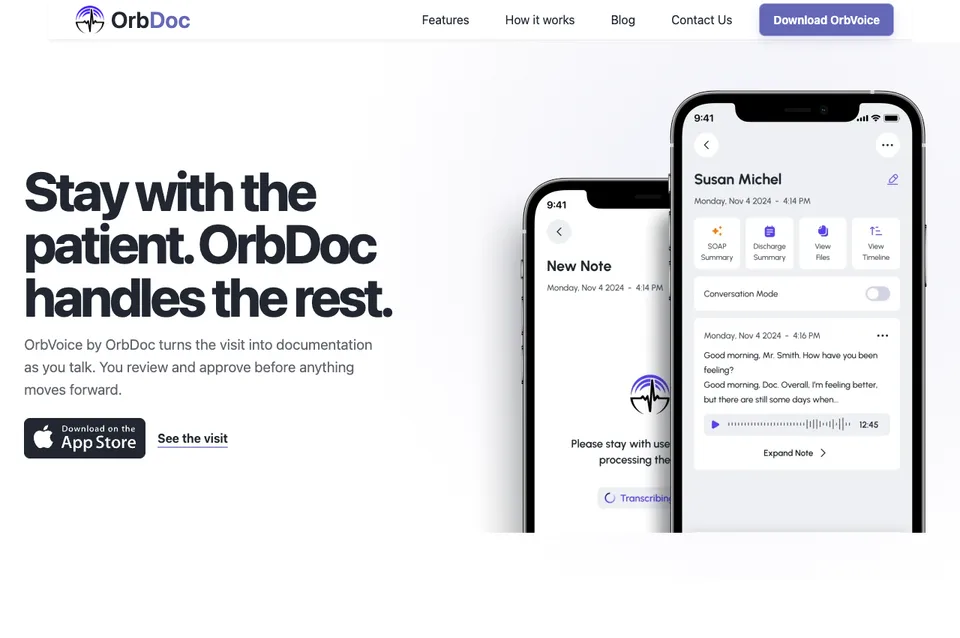
For clinicians
Keep the conversation connected to the clinical note.
I built the mobile, web, and backend workflow from recorded encounter to reviewable draft, keeping audio capture separate from note generation.
Recover from processing failures while keeping clinicians in control of the final note.
Each recording has an identity, local file, and upload state. A separate processing queue checks ownership, reuses completed uploads, and keeps retry context. Capture and document generation have distinct lifecycles, so a failed processing step can be retried without starting a new encounter.
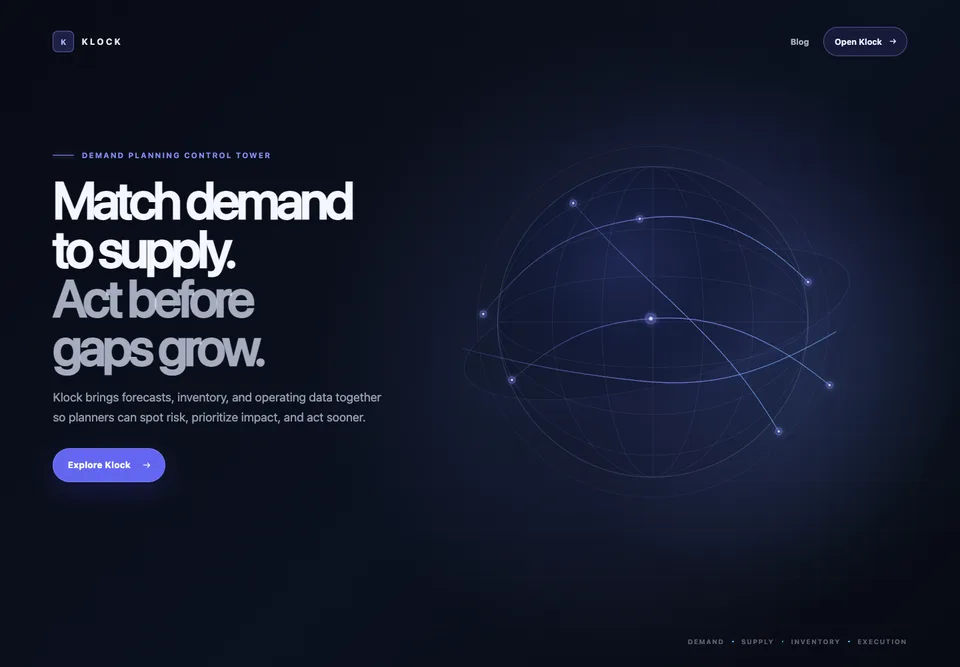
For supply-chain planners
Turn scattered spreadsheets into a weekly decision.
I translated supply-chain planning into a decision workflow: reconcile spreadsheet inputs, identify shortages or excess, and propose an action with its constraints.
See what to act on, what information is missing, and what needs approval.
Workbook normalization feeds deterministic planning rules. Missing inputs surface as repair tasks; recommendations retain source references and rationale. Approval and export eligibility remain explicit states. Estimates are planning aids, not realized savings; optional AI review is separate from the calculations.
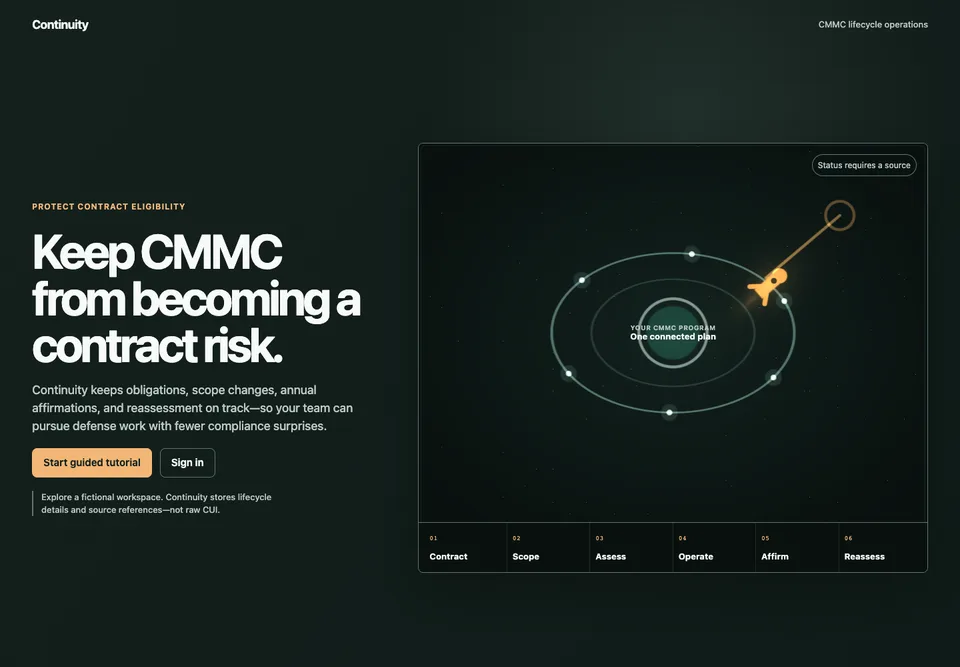
For defense contractors
Keep decisions defensible as requirements change.
I modeled compliance as an ongoing operating cycle, connecting scope, evidence owners, contract readiness, annual decisions, and reassessment.
Reconstruct what was reviewed, who decided, and which evidence supported the decision.
Permission and version checks precede annual decisions. A hashed snapshot preserves declarations and review state; exports carry checksums, and official submissions are recorded separately. Evidence references stay distinct from raw controlled information. This supports compliance operations; it does not grant certification.
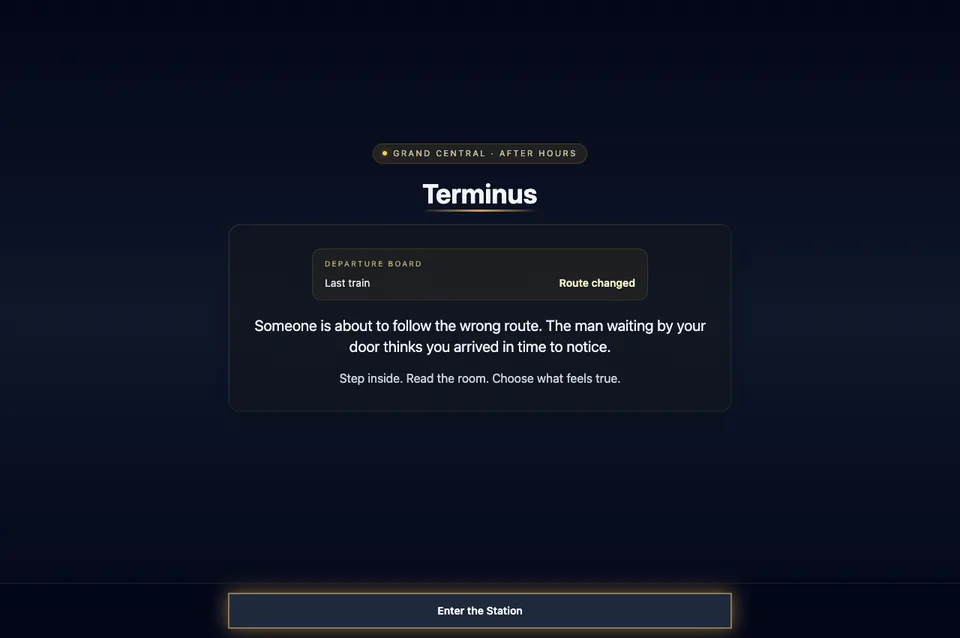
For learners and career advisors
Give career conversations something concrete to build on.
I designed a narrative system where choices change character trust and the next scene, creating contextual observations for reflection with an advisor.
Discuss what a learner chose, in context, and what they might explore next.
A choice transition coordinates story state, trust, and scene-specific observations. Advisor briefings draw from canonical server records rather than client-supplied profiles, preserving uncertainty when evidence is sparse. Authored skill tags support reflection, not validated proficiency or personality scores.
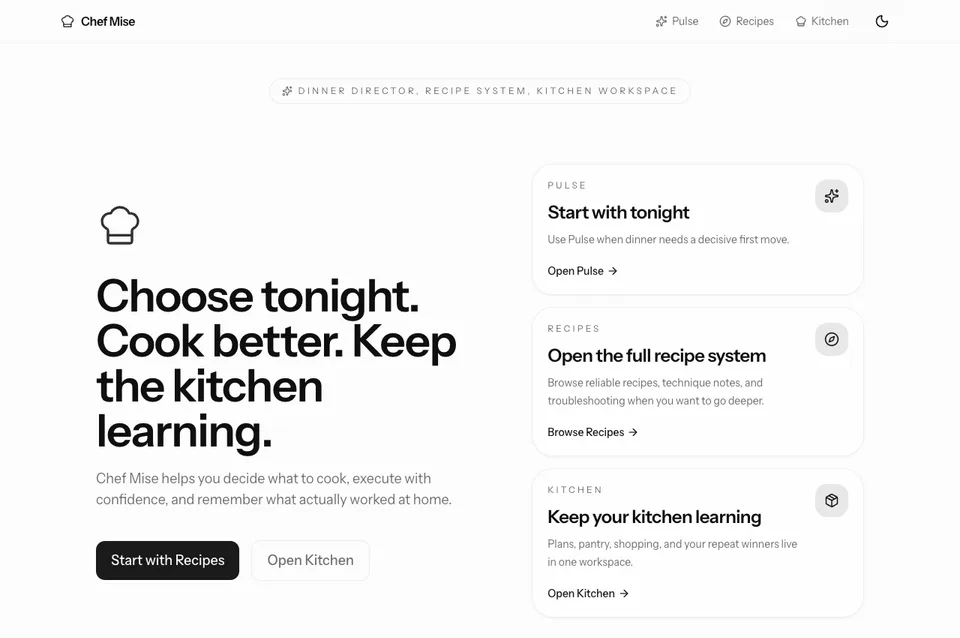
For home cooks
Design for the cook with their hands full.
I connected pantry choices, shopping, and guided cooking around divided attention: the right quantities, the current step, and cues for what to notice.
Turn a meal idea into a shopping list and a sequence you can pause and resume.
Pantry matching distinguishes required ingredients from optional items. Shopping lists merge compatible quantities while retaining recipe sources. Cook mode carries scaled ingredients into steps, timers, sensory cues, and saved progress—connecting data modeling to the demands of a busy kitchen.
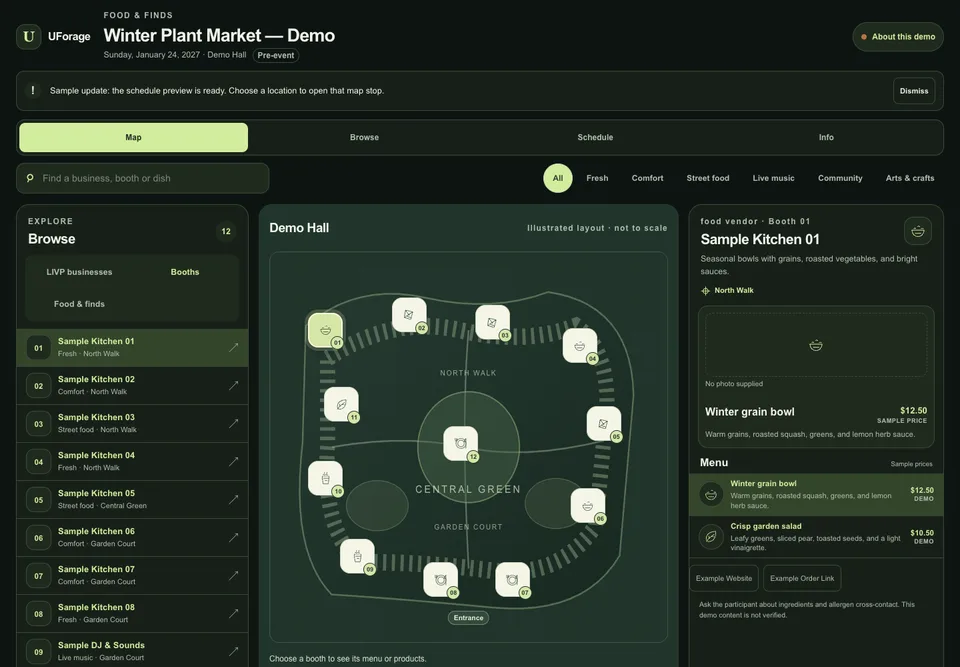
For event operators and local explorers
Connect discovery to a useful next step.
I built two spatial workflows: an event guide connecting visitors with vendors and sponsors, and a Long Beach notebook for field observations and follow-up.
Help operators understand guide engagement and explorers keep portable records.
The event demo validates interactions against its published guide before reporting engagement, not attendance or purchases. The separate notebook uses version-checked IndexedDB transactions to reject conflicting writes and confirms saves after commit. JSON/CSV exports make browser-local records portable.
Growth, PR & distribution
I connect engineering, original analysis, media relations, and community to give useful products a route to market.
OrbDoc · Data engineering, PR & growth
At OrbDoc, I led hospital-pricing analysis for Pulitzer Prize-winning journalist Gretchen Morgenson’s NBC News investigation.
The report credited our analysis, quoted me, and linked our free Bill Analyzer—connecting technical work to public visibility and a useful product.
Featured in NBC News’ homepage Editors’ picks.
I built a medical-bill OCR pipeline on open-source components, with custom logic for interpreting charges and checking them against CMS references.
TypeScript · React · Tesseract.js · PDF.js · CMS data
02 / Reach
Millions of readers
Report readership, per Gretchen Morgenson.
03 / Put it to use
Bill Analyzer
Custom document extraction, billing-rule checks, and CMS references help people make sense of a medical bill.
Useful tools. Timely questions. Stories worth sharing. I work across formats to give people a reason to engage.
Across 11 selected posts
Rounded views may include repeat viewers. Upvotes shown as Reddit net scores. Captured .
Data, in another register.
I wrote and performed a data rap with the Business of Business, using music and satire to bring a technical subject to another audience.
Read the making-ofWhy adopting AI means redesigning the work around it: processes, ownership, and how results are judged.
Read the essayI moderated a conversation with Jason Forrest and Jarrett Hurms on W.E.B. Du Bois’ visualizations, then wrote about evidence, audience, and representation.
Read the discussion recap